The language of Ta’nai
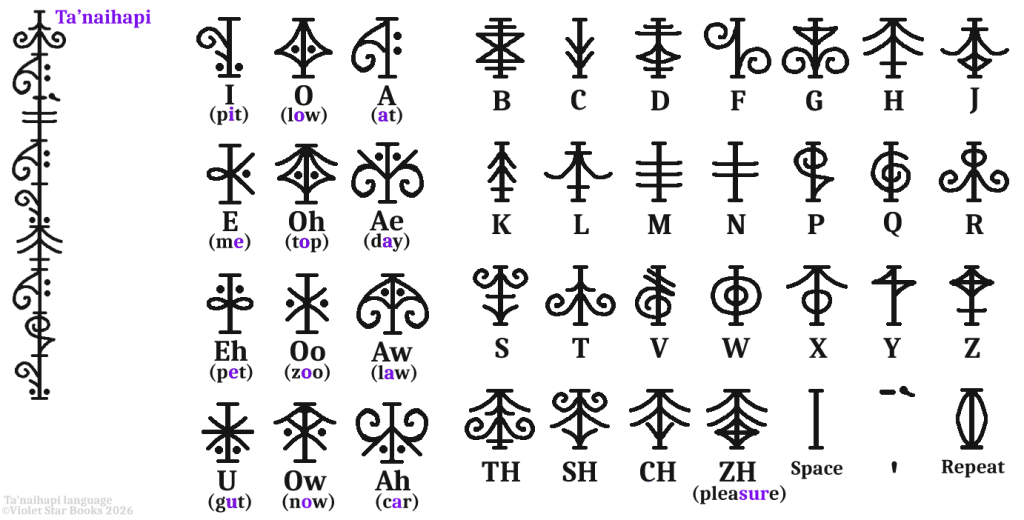
The Ta’naihapi language is completely fictional, so you can pronounce it however feels most comfortable to you, but I've included a pronunciation guide to show how the words are intended to be pronounced.
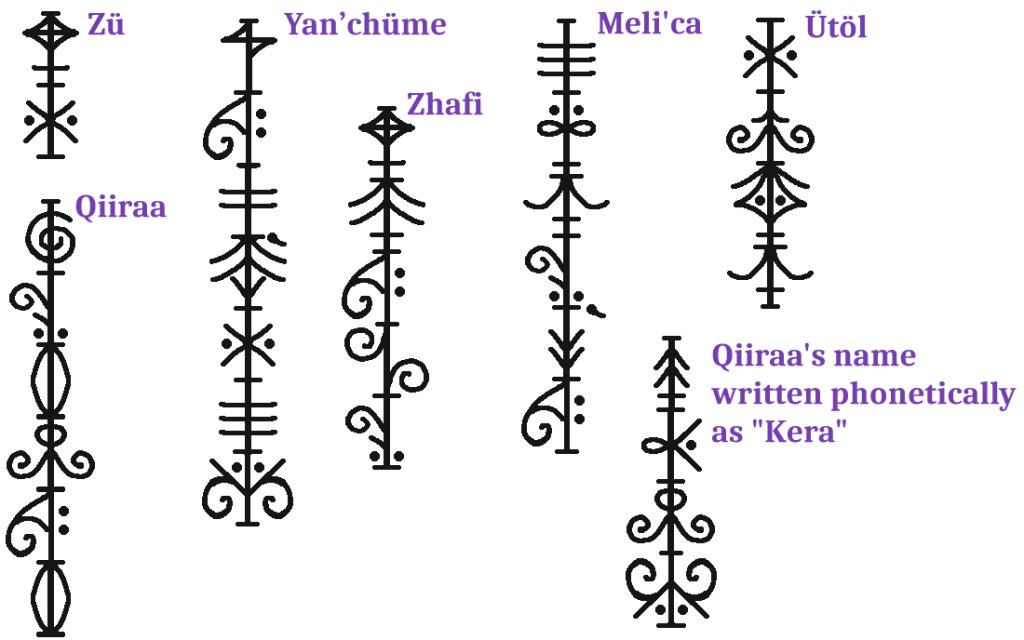
For example: Qiiraa (ˈkɪərə / "keer-a" ) = "flower"
Gives the word, then in the brackets are the IPA notation / phonetic pronunciation, which is a link to listen to the word being sounded out for you. Then the word's meaning and explanation.
The letter ü has a long sound like the o in "two" (uː)
The letter ö has a short sound like the o in "clock" (ɒ)
The letter ù has a short sound like the u in "cup" (ʌ)
- Alchiyö (æltchɪːəʊ / "al-chee-oh") = ‘painter’ - Village tattooist
- Amch (ɑːmt͡ʃ / "arm-ch") = ‘come’ (here/with me)
- Bax Tür’bash (bæksturbaʃ / "backs-ter-bash") = ‘Great King [of] Land’ - God of land and animals
- Bax Tür’malcha (bæksturmalˈʃa / "backs-term-al-cha") = ‘Great King [of] Thunder’ - God of night/darkness/storms
- Bünd (buːnt/ "boondt") = ‘uncle’
- Büx’nirch (buːks’nɜːt͡ʃ / "buuks-nerch") = 'same partner' - same sex romantic partnership, or one who is attracted to the same sex
- Chalch (chælch / "chall-ch") = "idiot" - spoken as an insult to indicate the person is stupid
- Chü’üs’ko (t͡ʃˈjuː uːs’kəʊ / "chew-oos-koh") = 'tough adult' - Those who complete the Pùg’parù's Nitit’raidi right of passage
- Cadgü (kadˈd͡ʒuː / "kah-jew") = ‘penis’
- Chöglugt (ˈʧɒglɒgtʰ / "chog-lort") = ‘beast’ - A horse/wolf hybrid mount
- Cu’laaki (kuːlaki / "koo-lak-ey") = ‘life parents’ - Parents of your life partner (parents-in-law)
- Dac’parùi’necub (ˈdɑk’paɹuːi’nekub / "dak-paroo-e-nekub") = ‘great tribes battle’ - The yearly tribal battle at Yamarga
- Dac’ütöl (ˈdɑkˈutʰthol / "dak-utoll") = ‘great fighter’ - Honorific for the best warriors in the tribe
- Dac’zhǔ (dɑːkʒǔ’ / "Dahk-zhoo")= 'great hunter' - Honorific for the elite hunters of the Yil’parù
- Dübch’uhz (du:bch’uhz / "dub-choose") = ‘fight stick’ - Ceremonial 2-handed fighting staff
- Dǔffen’mul (dʌffɛn’mɐl / "duffen-mull") = ‘sleep clothes’ - nightgowns and clothing worn to bed
- Emi’xöch (emi’zɒk / "Emee-zok") = "village vagina" - Name for a woman who provides sexual services for the village
- Faci’can (fasikæn / "fassy-can") = 'thick tree' - a variety of tree
- Fasaü (fæsˈu / "fass-oo") = ‘killer’ - Title/Rank for the elite warriors of the Yil’parù tribe
- Fayö (ˈfaˈjɔ / "fai-yoh" ) = A deer-like wild animal
- Gören (goˈrːn / "goh-ren") = ‘foreigner’ - Derogatory term for an offworlder
- Hariia (ˈhaʁiːa / "Har-ree-ah") = 'egg maker' - Domesticated chicken-like animal
- Kabxo (kæbsɔ / "kab-so") = A bear-like wild animal
- Kam’towi (kæm’tawi / "kam-taw-ee") = ‘prize love’ - Partner who was defeated in the union trial
- Kax’mir (kæksmɪr / "kacks-meer") = 'Pretty woman' - A term of endearment.
- Kelnì (kɛlnɪ / "kell-nee") = ‘child’ - A term of endearment for a younger person
- Kölelu (kɒliːlu / "ko-lee-loo") = A shark-like ocean creature
- Malcha (malˈca / "mal-cha") = ‘thunder’ - The sound attributed to the God shouting during quarrels
- Matja’nulda (mʌtd͡ʒa’nʌlda / "mutjah-null-dah") = 'deciding leader' - the governor/mayor type role for the Pùg’parù and Wukto’parù
- Meli (mɛlliː/ "melly") = Bird
- Muhtim (mʌˈtim / "muh-tim") = Small ferret-like creature from the forest
- Nas’sav (næsɑːv / "nass-sav") = 'ocean flower' - The name for a particular flower that grows only in the ocean
- Neh’towi (nɛhta`wi / "neh-taw-ee") = ‘victory love’ - Partner who was victorious in the union trial
- Neh’möraö (nɛhmɒˈraɒ / "neh-more-are-o") = ‘Victory winner’ - The winner of the Great Tribe Battle
- Nin (nʲin / "neen") = ‘no‘
- Nin’cük pùg’parù (nʲin`kuk pʌːgˈpaɹuː/ "neen-cuk pug-par-oo") = ‘no law coast tribe’ - Rebel offshoot faction of the Pùg’parù
- Nin’ütöl pùg’parù (nʲinˈutʰthol pʌːgˈpaɹuː/ "neen-oo-toll pug-par-oo") = ‘no fighter coast tribe’ - Peaceful tribespeople of the Pùg’parù
- Nitit’raidi (Nitit’ɹeɪdɪ / "nit-it-raidy") = 'fear trial' - Pùg’parù right of passage that involves terrorizing the participants
- Noba’nö (nəʊbɑh nəʊ / "nobah-no") = 'sexual person' - The name for a person who provides sexual services for the village
- Nulda (nʌlda / "Null-dah") = 'leader' - General term for someone who runs a village
- Nulda‘bücux (nʊlda buˈcʰʊx / "null-dah-boo-chuck") = ‘leader meeting’ - Leader’s council at Yamarga
- Nuldai (nʊldˈaɪ / "null-dye") = ‘Leaders’ - The tribal leaders for each tribe that attend the Nulda‘bücux
- Nuö’laaki (ˈnʲʊɵlaki / "new-oh-lark-ee") = ‘old family’ - Council of elders that act as leaders/governors of a village
- Orch’shü (ɔrʧʰʃu / "awe-chew") = ‘time keep’ - Village timekeeper/historian/record keeper
- Pasitta (pɑːsitɑː/ "pah-sit-ah") = 'service' - The service people, such as cooks, cleaners, sewers etc. of a tribe
- Pillakaa (ˈpillakaː / "pill-ark-ah") = ‘meat maker’ - Butcher and leather tanner
- Pinituh (pinitɑː / "pin-it-ah") = A bovine creature used for pulling carts
- Pùgparù (pʌːgˈpaɹuː /"pug-pah-roo") = ‘coast tribe’ - The raider/rebel tribe of the coast
- Pǔw (ˈpjuː / "pew") = Cat-like forest animal (Often sold to offworld traders)
- Qak‘sav (kæk’sæv / "kack-sav") = 'earth flower' - The name for a particular flower that grows only in the deep forests
- Raidi (ˈɹeɪdi / "raid-ey") = 'trial' - Name for the ‘union trial’ where young adults fight to obtain a life partner
- Raidi’üs’ko (ˈɹeɪdi uːs’kəʊ / "radi-oos-coh") = 'trial adult age' - Person declared an adult from being in a union trial
- Rüd (ruːt / "rood") = Domesticated dog-like animal used on farms
- Saa’nü (sanuː / "sah-noo") = ‘the first’ - Title of the founder of the Pùgparù
- Sa’suus (sæsuːs / "sass-oose") = 'many family/house' - Dorm house for tribe’s children
- Shawwaǔ (ˈʃɔːwauː / "shah-wah-woo") = 'length' - Sang term for penis
- Shaxu (ˈʃæksu / "shack-sue") = 'sewer' - Title for those who sew/repair clothing for others
- Shö’chüx (ʃəʊ cuː / "show-chew") = ‘forehead hat’ - Ceremonial headdress worn only by Fasaü
- Shov’uhz (ʃɑvuhz / "shov-ooze") = ‘short stick’ - Weapon used for the tribal battle at Yamarga
- Siilo (silo / "sill-oh") = 'healer' - Title of the healer of a tribe
- Sirkka (ˈsiʁkka / "sir-kah") = A large stag-like horned animal
- Sobbüm (sɔbum / "saw-boom") = Fox-like forest animal
- Su’mir (suːmɪr / "sue-meer") = 'second woman' - The second life partner in a polygamous relationship
- Ta emi’ogso’tot (tɑː ɛmɪ’ɒgso’tɒt / "tah-emmy-ogg-so-tot") = ‘big village birth register’ - The Orch’shü’s record book
- Tannga (ˈtaŋŋa / "tun-nah") = ‘ray of light’ - Lightning
- Taa’töx (taa tɒks / "tar-tocks") = ‘my protector’ - Qiiraa’s term of endearment for Zü
- Taa’towi’ca (tɑːtɒwikˈæ / "ta-towey-kah") = ‘my little love’ - Zü’s term of endearment for his niece
- Taa’xel (ta’ziːl / "tah-zeel") = ‘my gift’ - Zü’s term of endearment for Qiiraa
- Ta’nai (taɪˈnaɪ / "tie-nigh"") = The planet Ta'nai.
- Ta’naihapi (tɑːnɑːhapɪ / "Tah-nah-hahpy") = The tribal residents of the planet Ta'nai.
- Tatal (tatal / "tat-al") = 'record' - Person who transcribes notes for the meetings, eg a ‘scribe’
- Tüm’gortü (tʰumˈgɔrtʰu / "toom-gore-too") = ‘Trade tongue’ - Title for speakers of the offworld trader language
- Tüb’dün (tuːb’duːn / "toob-doon") = ‘tooth beast’ - Sabertooth Tiger-like beast
- Tuukti (tukti / "toohk-tee") = ‘wood’ - Village woodcarving artisan
- Tuulu (tuːlu / "too-loo") = 'right/entitlement' - A title of birthright lineage to the Zhaǔ (eg “prince”)
- Tuulu’blö (tuːluː’blö / "too-loo-blo") = ‘birthright mother” - mothers of the Tuulu, and the Zhaǔ's life partners
- Tuu’töt (tu’tɒt / "too-tot") = ‘big horn’ - Mammoth-like beast
- Ubs'a (ubsa / "oob-sah") = 'wool maker' - Sheep-like animal
- Üdnü’sav (uːdnuː’sæv / "ood-noo-sav") = 'night flower' - The name for a particular flower that grows only in the dark caves
- Ült’bash’parù (ultbaˈʃˈpaɹuː / "oolt- bash-pah-roo") = ‘flat lands tribe’ - The agricultural tribe of the plains
- Üs’ko (uːs’kəʊ / "oos-coh") = 'adult age/year' - Term for the ‘coming of age’ where person is considered an adult
- Uta’nö (utɑːnəʊ / "oo-tah-no") = 'cleaning person' - Title for villagers who wash clothing for others
- Ütöl (ˈutʰthol / "oo-toll") = ‘fighter’ - Zü’s chöglugt mount
- Valaa (vɑːlɑ / "Vah-lah" ) = "special" - Title for all the important village roles.
- Vija’gün (vaɪæ guːn / "viya-goon") = 'snow wolf' - White wolf-like creature that lives in the snow
- Vija’sav (vaɪæ’sæv / "viya-sav") = 'snow flower' - The name for a particular flower that grows only in the snow of the mountains
- Vuv‘blux (vʌv‘blʌks / "vuv-blucks") = ‘shit fuck’ - Profanity
- Vung’kuuq (vʌŋkuːq / "vung-kook" ) = ‘metal sap’ - Special stain used to harden weapons
- Wamikwik (wæmɪkwɪk / "wammy-quick") = 'soldier’ - the Pùgparù's name their their elite warriors (equivalent to Fasaü)
- Wuhk’bo (wʌk-bəʊ / "wuck-boh") = 'milk man' - Bull-like animal
- Wuhk’a (wʌk-a / "wuck-ah") = 'milk maker' - Cow-like animal for milking
- Wukto’parù (wˈɑktoˈpaɹuː/ "wahk-toe-pah-roo") = ‘mountain tribe’ - The blacksmith tribe of the mountains
- Xab’laaki (zab’laki / "zab-larky")= ‘care parents’ - Nanny-like caregivers
- Xi’nöst (zaɪ’nɒst / "zy-nost") = 'sky fortress' - Where the spirits of the deceased live (eg Heaven)
- Xob Nas’bǔ (zob nʲasbʊ /"zob-nass-boo") = ‘Queen [of] Sea Water’ - Goddess of the ocean and ocean creatures
- Xob Nülbuxa (zob nulˈbʊksa /"zob-nil-booksa") = ‘Queen [of] Sky’ - Goddess of the Sky/Day/Sun/Lightning
- Xörcu (zorcu / "zoor-chew") = ‘potion’ - Village potionmaker/apothecary/herbalist
- Xuk‘a(zuːkɑː / "zoo-kah" ) = 'scent maker' - Person who make perfumes, incense and other scented products
- Xüsh (zuːʃ / "Zoosh")= ‘buttocks’
- Yamarga (jaˈmaɹga /"yah-mar-ga" ) = The trading post & annual tribal meeting area
- Yan (jan / "yan") = Bee-like insect
- Yash’nö (ˈjaʃnə / "Yash-noh") = “religion person” - Spiritual leaders (eg Priests and Priestesses)
- Yil’parù (jilˈpaɹuː / "yeel-pah-roo") = ‘forest tribe’ - The hunting tribe of the forest
- Zhaǔ (zhoʊ̯ / "zh-oow") = ‘sovereign’ - The supreme ruler of a tribe
- Zhǔ’üs’ko ( ʒǔ’uːs’kəʊ / "zh-oos-coh") = 'hunt adult age' - Honorific for an adult who completed the üs’ko hunt challenge
- Zonù’üs’ko (zɒnu uːs’kəʊ / "Zonoo-oos-coh") = '25 adult age' - An adult by way of reaching age 25, who didn’t become a life partner via the union trial, and didn’t complete the üs’ko hunt
- Zü (zuː / "zoo") = ‘God-like, of the Gods’
- Chöglugt (ˈʧɒglɒgtʰ / "chog-lort") = ‘beast’ - A horse/wolf hybrid mount
- Hariia (ˈhaʁiːa / "Har-ree-ah") = 'egg maker' - Domesticated chicken-like animal
- Fayö (ˈfaˈjɔ / "fai-yoh" ) = A deer-like wild animal
- Kabxo (kæbsɔ / "kab-so") = A bear-like wild animal
- Kölelu (kɒliːlu / "ko-lee-loo") = A shark-like ocean creature
- Meli (mɛlliː/ "melly") = Bird
- Muhtim (mʌˈtim / "muh-tim") = Small ferret-like creature from the forest
- Pinituh (pinitɑː / "pin-it-ah") = A bovine creature used for pulling carts
- Pǔw (ˈpjuː / "pew") = Cat-like forest animal (Often sold to offworld traders)
- Rüd (ruːt / "rood") = Domesticated dog-like animal used on farms
- Sirkka (ˈsiʁkka / "sir-kah") = A large stag-like horned animal
- Sobbüm (sɔbum / "saw-boom") = Fox-like forest animal
- Tüb’dün (tuːb’duːn / "toob-doon") = 'tooth beast' - Sabertooth Tiger-like beast
- Tuu’töt (tu’tɒt / "too-tot") = ‘big horn’ - Mammoth-like beast
- Ubs'a (ubsa / "oob-sah") = 'wool maker' - Sheep-like animal
- Vija’gün (vaɪæ guːn / "viya-goon") = 'snow wolf' - White wolf-like creature that lives in the snow
- Wuhk’bo (wʌk-bəʊ / "wuck-boh") = 'milk man' - Bull-like animal
- Wuhk’a (wʌk-a / "wuck-ah") = 'milk maker' - Cow-like animal for milking
- Yan (jan / "yan") = Bee-like insect
- Büx’nirch (buːks’nɜːt͡ʃ / "buuks-nerch") = 'same partner' - same sex romantic partnership, or one who is attracted to the same sex
- Chü’üs’ko (t͡ʃˈjuː uːs’kəʊ / "chew-oos-koh") = 'tough adult' - Those who complete the Pùg’parù's Nitit’raidi right of passage
- Cu’laaki (kuːlaki / "koo-lak-ey") = ‘life parents’ - Parents of your life partner (parents-in-law)
- Kam’towi (kæm’tawi / "kam-taw-ee") = ‘prize love’ - Partner who was defeated in the union trial
- Kax’mir (kæksmɪr / "kacks-meer") = 'Pretty woman' - A term of endearment.
- Kelnì ("kell-nee") = ‘child’ - A term of endearment for a younger person
- Neh’möraö (nɛhmɒˈraɒ / "neh-more-are-o") = ‘Victory winner’ - The winner of the Great Tribe Battle
- Neh’towi (nɛhta`wi / "neh-taw-ee") = ‘victory love’ - Partner who was victorious in the union trial
- Raidi’üs’ko (ˈɹeɪdi uːs’kəʊ / "radi-oos-coh") = 'trial adult age' - Person declared an adult from being in a union trial
- Su’mir (suːmɪr / "sue-meer") = 'second woman' - The second life partner in a polygamous relationship
- Taa’töx (taa tɒks / "tar-tocks") = ‘my protector’ - Qiiraa’s term of endearment for Zü
- Taa’towi’ca (tɑːtɒwikˈæ / "ta-towey-kah") = ‘my little love’ - Zü’s term of endearment for his niece
- Taa’xel (ta’ziːl / "tah-zeel") = ‘my gift’ - Zü’s term of endearment for Qiiraa
- Üs’ko (uːs’kəʊ / "oos-coh") = 'adult age/year' - Term for the ‘coming of age’ where person is considered an adult
- Zhǔ’üs’ko ( ʒǔ’uːs’kəʊ / "zh-oos-coh") = 'hunt adult age' - Honorific for an adult who completed the üs’ko hunt challenge
- Zonù’üs’ko (zɒnu uːs’kəʊ / "Zonoo-oos-coh") = '25 adult age' - An adult by way of reaching age 25, who didn’t become a life partner via the union trial, and didn’t complete the üs’ko hunt
- Chalch (chælch / "chall-ch") = "idiot" - spoken as an insult to indicate the person is stupid
- Faci’can (fasikæn / "fassy-can") = 'thick tree' - a variety of tree
- Gören (goˈrːn / "goh-ren") = ‘foreigner’ - Derogatory term for an offworlder
- Nas’sav (næsɑːv / "nass-sav") = 'ocean flower' - The name for a particular flower that grows only in the ocean
- Noba’nö (nəʊbɑh nəʊ / "nobah-no") = 'sexual person' - The name for a person who provides sexual services for the village
- Nin’cük pùg’parù (nʲin`kuk pʌːgˈpaɹuː/ "neen-cuk pug-par-oo") = ‘no law coast tribe’ - Rebel offshoot faction of the Pùg’parù
- Nin’ütöl pùg’parù (nʲinˈutʰthol pʌːgˈpaɹuː/ "neen-oo-toll pug-par-oo") = ‘no fighter coast tribe’ - Peaceful tribespeople of the Pùg’parù
- Nitit’raidi (Nitit’ɹeɪdɪ / "nit-it-raidy") = 'fear trial' - Pùg’parù right of passage that involves terrorizing the participants
- Qak‘sav (kæk’sæv / "kack-sav") = 'earth flower' - The name for a particular flower that grows only in the deep forests
- Raidi (ˈɹeɪdi / "raid-ey") = 'trial' - Name for the ‘union trial’ where young adults fight to obtain a life partner
- Sa’suus (sæsuːs / "sass-oose") = 'many family/house' - Dorm house for tribe’s children
- Ta emi’ogso’tot (tɑː ɛmɪ’ɒgso’tɒt / "tah-emmy-ogg-so-tot") = ‘big village birth register’ - The Orch’shü’s record book
- Ta’naihapi (tɑːnɑːhapɪ / "tah-nah-hahpy") = The tribal residents of the planet Ta'nai.
- Üdnü’sav (uːdnuː’sæv / "ood-noo-sav") = 'night flower' - The name for a particular flower that grows only in the dark caves
- Vija’sav (vaɪæ’sæv / "viya-sav") = 'snow flower' - The name for a particular flower that grows only in the snow of the mountains
- Xi’nöst (zaɪ’nɒst / "zy-nost") = 'sky fortress' - Where the spirits of the deceased live (eg Heaven)
Major Characters
- Hus’hosu ("hoos-hos-oo") = "moon dancer" = Qiiraa's chöglugt
- Jiilu (ˈd͡ʒilːu / "gee-loo") = Qiiraa's birthname, and Ta’naihapi word for "vomit"
- Kurilchö (krˈrlcho / "koo-rill-cho") = “preparation” = Ruler of the Pùg’parù
- Meli’ca (meli’ka / "Melly-kah") = “little bird” = Zü’s first life partner
- Qiiraa (ˈkɪərə / "keer-a") = “flower” = Main story character (Was previously Jiilu)
- Ütöl (ˈutʰthol / "oo-toll") = “fighter” = Zü’s main chöglugt
- Yan’chüme (janˈʧʰume / "yan-choo-may") = “bee wing” = Accomplished warrior
- Zhafi ("zhaff-ee") = “dragon” = The Tüm’gortü for Nögdsa
- Zü (ˈzu / "zoo") = “god/mighty” = Main story character
- Aattuu (atuː / "Atoo") = “duck” = Meli’ca’s mother
- Chüxenx (t͡ʃˈjuːnɪks / "Chew-nix") = “sweet” = Zü’s mother
- Galsüxu (Galsuːxu / "Gal-soo-hoo")= "winemaker" = Zü’s (step) father
- Malul (mæluːl / "Mal-ool") = “cloud” = Zü’s younger (step) brother
- Rüd’mak (rüd’mak / "Rood-mahk") = “dog sound” = Meli’ca’s father
- Tökt (tɒ kt / "Tock-t") = “scale” (reptile skin) = Zü’s older (step) brother
- Üchüc (uːlˈt͡ʃʊk / "ool-chook") = “dealer” = Pùg’parù trader
- Vüng’kut (vuːng’kʌt / "Voon-cut") = “metal skull” = Ruler of the Wukto’parù
- Xöya ( zɔɪja / "Zoy-ah") = “shadow” = Zü’s sister
- Ayön (aˈjɒn / "Eye-yon") = "cat" = Malul’s Wife
- Caldüx (kalˈdʌks / "kal-ducks") = “bite” = One of Zü’s chöglugt
- Chalbö’xi (chalbɒ’xi / "Chall-bah-he") = “grey sky” = Lady who traded glass jars
- Chaxnün (chaksnuːn / "Chacks-noon") = "wiggle" = Yan’chüme & Zhafi’s daughter
- Che (chiː/ "Chee") = “pretty” = One of Zü’s chöglugt
- Chöshech (chɒshek / "Choss-heck" ) = “anger” = Rebel Pùg’parù
- Dalzhǔ’hus (dalzhǔ’hus / "Dal-zoo-hoos")= "full moon" = Xoya’s husband
- Kö‘geb (kˈɒ geb / "Koh-geb") = “big beard” = Trader Blacksmith from the Wukto’parù
- Gün’ri (gʊn’ri / "Goon-ree") = “wolf cry” = Tökt’s husband
- Lij’ca (lid͡ʒ’ka / "Leeg-kah") = "little Frog" = Xoya’s daughter
- Tüb (tʊb / "Toob") = “tooth” = One of Zü’s chöglugt
- Tuu’gün (tʊ guːn / "Too-goon") = “big wolf” = Zü’s biological father
- Zhoz (zhɒz / "Zhaus") = “brown” = One of Zü’s chöglugt
- Emaliia Vartan (ɛmɑːliɑː / "Emall-ee-ah") = Mother of Jiilu (Qiiraa)
- Kebrarr (kˈɛbrɑːh / "Keb-rah") = Pirate from the Lightning Fang
- Meeriik (mɛrˈɪk / "Meh-rick")= Pirate from the Lightning Fang
- Miingh (mingh / "ming") = Pirate from the Lightning Fang
- Sajinö (sanˈd͡ʒino / "San-gino") = Pirate from the Lightning Fang
- Skeige (skiːd͡ʒ / "Skeeg") = Glappoian Pirate from the Lightning Fang
- Svithnar (svˈɪˈθ-nah / "Svith-nah") = Glappoian Pirate from the Lightning Fang
- Taars Vartan (tɑːɹs / "Tahs") = Father of Jiilu (Qiiraa)
- Yiilltek (ˈjɪltɛk / "Yill-tek") = Pirate from the Lightning Fang
Major Characters
- Kurilchö (krˈrlcho / "koo-rill-cho") = “preparation” = Ruler of the Pùg’parù
- Meli’ca (meli’ka / "Melly-kah") = “little bird” = Zü’s first life partner
- Rimeli (rɪm eli / "Rim-elly") = "songbird" = One of the young women in the village
- Tuu’dur (tuːdɔːr / "Too-door" ) = "big nose" = One of the young men in the village
- Ütöl (ˈutʰthol / "Oo-toll") = “fighter” = Zü’s main chöglugt
- Waǔ’quul (wæjˈkuːl / "Way-cool") = "Long journey" = One of the young men in the village
- Yan’chüme (janˈʧʰume / "yan-choo-may") = “bee wing” = Accomplished warrior & Zü's close friend
- Zhafi ("zhaff-ee") = “dragon” = The Tüm’gortü for Nögdsa & Zü's best friend
- Zü (ˈzu / "zoo") = “god/mighty” = Main story character
- Cha’cels (chɑː’sɛls / "Chah-sells") = "enjoyable surprise" = Zhafi’s sister
- Chüxenx (t͡ʃˈjuːnɪks / "Chew-nix") = “sweet” = Zü’s mother
- Galsüxu (Galsuːxu / "Gal-soo-hoo")= "winemaker" = Zü’s (step) father
- Gün’ri (gʊ’nri / "Goon-ree") = “wolf cry” = Elite warrior (Fasaü) and Tökt’s husband
- Malul (mæluːl / "Mal-ool") = “cloud” = Zü’s younger (step) brother
- Tüffu (tuːfuː / "Too-foo" ) = "dance" = One of the young women in the village
- Tökt (tɒ kt / "Tock-t") = “scale” (reptile skin) = Zü’s older (step) brother
- Vüng’kut (vuːng’kʌt / "Voon-cut") = “metal skull” = Ruler of the Wukto’parù
- Aattuu (atuː / "Atoo") = “duck” = Meli’ca’s mother
- Bolun’tid (bɒlun tɪd / "Bollin-tid") = "orange feather" = One of young men in the village
- Che’nogcal (chɛ’nɒgkal / "Che-nog-kal") = "pretty rainbow" = One of the young women in the village
- Dalzhǔ’hus (dalzhǔ’hus / "Dal-zoo-hoos")= "full moon" = Xoya’s husband
- Kaas’mak (kas’mæk / "Kahs-mak") = Monster sound = One of the elite warriors
- Müv’söc (mʌvsɒk / "Muv-sock") = "tree break" = One of the young men in the village
- Niir’iirnii (nir’ir’niː / "Ne-rew-nee") = "bad mist" = Elite female warriors
- Pitmi (pɪtmi/ "Pit-me") = "rain" = One of the elite warriors
- Rüd’mak (rüd’mak / "Rood-mahk") = “dog sound” = Meli’ca’s father
- Söxnigt’naar (sɒksnigt’nɑː / "Socks-nicked-nah" ) = "claw plant" = Kurilchö's brother
- Shöst’tid (ˈʃɔːs’tid / "Shoh-stid") = Blue feather = One of the young women in the tribe
- Tuu’gün (tʊ guːn / "Too-goon") = “big wolf” = Zü’s biological father
- Vut’neloc (vʌt’nɛlɒk / "Vut-nell-ock") = "black fin" = Kurilchö’s brother
- Wukto’ca (wˈɑktokɑːh / "Wahk-toe-cah" ) = small mountain = Big burly fighter in the village
- Xöya ( zɔɪja / "Zoy-ah") = “shadow” = Zü’s sister
- Zhoz (zhɒz / "Zhaus") = “brown” = One of Zü’s chöglugt