
Ta'naihapi Information
The world of Ta'nai was created to give a rich background for the storytelling of the Warrior series of books. While all the important details needed to drive the story are given in the books, there are some background elements that never made it in, and details which readers might like to know more about. If you are interested in this fictitious world, you can find more information on it here.
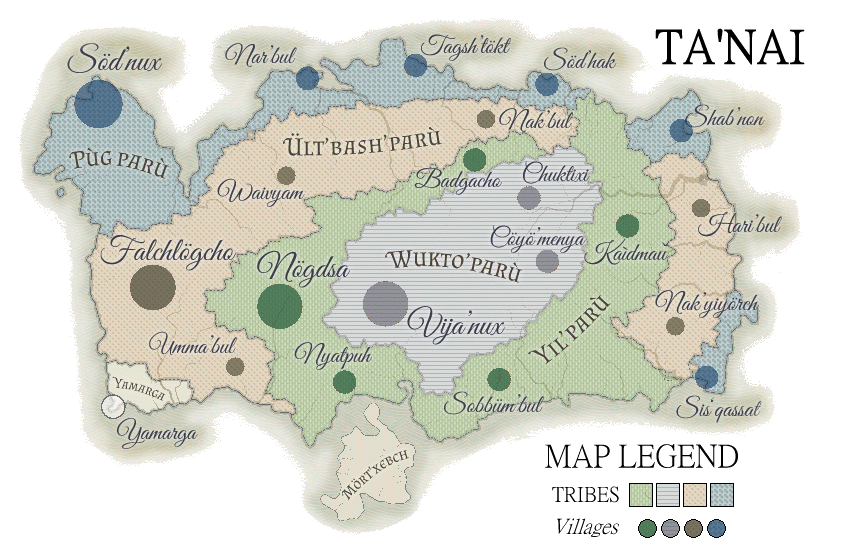
The Ta'naihapi divided themselves into four distinct tribes, and have claimed portions of the main landmass as their tribal lands. The Pùg’parù of the coast, Ült’bash’parù of the plains, Yil’parù of the forests, and Wukto’parù of the mountains. Some Ült’bash’parù live on individual homesteads scattered across their lands, but all other Ta'naihapi live within the villages or main towns. Nobody lives in the neutral zone of "Yamarga", or on the a nearby uninhabited rocky volcano island of Mört Xebch.
The Ta’naihapi are human-like in appearance - tall and strong, with golden-brown skin and long black hair.
With no technology and a strong desire to maintain their simplistic way of life, they are not interested in space travel, and do not like "offworlders" visiting their planet. Although they are deeply spiritual, the everyday Ta’naihapi do not have any practices of worship, it is only the Yash’nö, a spiritual role for each village, who engages in religious practices and teachings on behalf of the tribe.
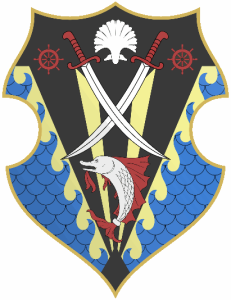
They worship the Sea Goddess, Xob Nas’bǔ, and decorate themselves and their mounts with shells, pearls and blue paint to evoke their beloved sea. Their hair is cut short and spiked, wearing the traditional mark of shame as a mark of honour.
Pùg’parù dress themselves in finely woven lightweight cloth that comes from the offworld traders, dyed bright blue from the shell of a mollusk found in their oceans. Men typically wear narrow knee-length loincloths trimmed with small shells, often with vests made from fish-skin leather over their bare chests. Women dress in long flowing sleeveless gowns made from the same blue cloth, cinched at the waist with a fish-skin leather belt. Both men and women love jewellery that features small shells, pearls and polished coral and dried kelp, as well as silver jewellery purchased from the Wukto’parù.
Warriors of the coastal tribe are known for their violent savagery and bloodlust, favouring swords they obtain from the Wukto’parù blacksmiths. Attacking the vulnerable Ült’bash’parù farms for enjoyment more than necessity, the Pùg’parù raiders take what they want - women and property, leaving a wake of destruction in their path. For this reason they have been banned from entering the Yil’parù forests, yet the Pùg’parù continue to do as they please.
Their fortress settlements are built on the water’s edge, with docks for their ships. Surrounded with high walls, the villages become impenetrable once the gates were closed - a precaution against attack from tribemates from other villages, as well as from other tribes. Pùg’parù homes are basic, not much more than small thatch huts built inside their fortress walls, stacked up on top of each other to squeeze as many people as possible into a fairly small area. They make use of metal scavenged from spaceship wrecks to decorate their homes and village, along with flags of colourful cloth and large fearsome looking bones from sea creatures.
The Pùg’parù trade woven seagrass floor mats, pearls, preserved fish and kelp, shells, blue pigment, fish-skin leather and fruits that grow on the coastal trees.
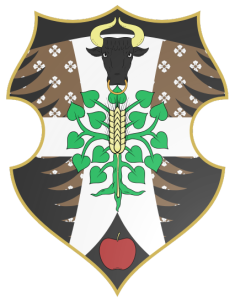
More than simple labourers, they serve a very important role among the Ta’naihapi - providing much of the food, textiles and other goods to the other tribes. They grow orchards of fruit bearing trees, and plantations of trees for logging - the wood being used for housing and wagonmaking among other things.
Some Ült’bash’parù live within their villages, running shops or working in the storehouses, but given their agricultural lifestyle, most Ült’bash’parù spread out over their lands, living in small family-run homesteads. This leaves them vulnerable to Pùg’parù, as it is difficult for a small family of farmers to protect themselves when a large band of raiders attack and outnumber them.
Yil’parù warriors often come to the aid of their Ült’bash’parù neighbours, helping to fight off raiders, and they have developed a network of lookout towers and messenger birds to help communication between the two tribes.
Ült’bash’parù clothing shows their desire for practical and humble attire, where much of it is left undyed, or coloured in rich earthy tones to show their love of the land. Men and women alike wear loose fitting trousers, often gathered at the lower leg with criss-crossed bindings. To cover themselves from the harsh sun while they work the fields, they wear a poncho-like garment and wide-brimmed hats. Those who live within the villages often wear slightly less rustic attire to that of the more rural tribespeople.
Unlike those from the other tribes, the Ült’bash’parù do not decorate their bodies with tattoos to the extent the others do. Preferring to leave their bodies fairly unadorned. Their use of jewellery is also minimal, except for celebrations or other special events.
With the Ült’bash’parù tribespeople living independently from each other, their homes are the largest among the Ta’naihapi, as families live together until the children grow to adulthood and move out to start their own. Most Ült’bash’parù homes are built using stone and wood, with multiple rooms and even two or three stories.
Each Ült’bash’parù village is governed by a Nuö’laaki - a group of 10 highly respected elders, 5 male and 5 female. This is said to provide a fair and democratic approach to leadership, and allows for each village to run somewhat independently to the others. Each midwinter at the Yamarga festival, two Nuö’laaki elders from each village gather to hold a meeting to discuss any tribal issues that need addressing.
The Ült’bash’parù trade goods including fruits, vegetables, grains, cheese, soaps, perfume oils, textiles, beasts of burden and food-producing animals, and they make the trader wagons for all tribes.
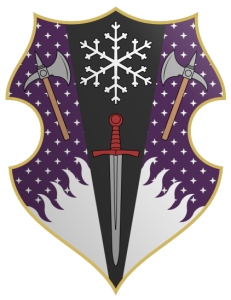
Miners and blacksmiths, they work hard to extract the precious metals and gems from the depths of the mountains and forge them into weapons, jewellery and other goods.
While they keep mostly to themselves, they do consider their neighbouring Yil’parù to be their brothers and sisters, and trade their highly prized weapons and tools with the other tribes.
The cold climate they live in means that the Wukto’parù favour heavy fur-lined clothing. Men and women alike wear long ankle-length heavy hide skirts, trimmed in fur, with intricate woven/embossed leather chestpieces and heavy fur cloaks. The men grow thick beards for additional warmth.
They hunt and ride the large beasts of the tundra, such as the kabxo (bear) and tuu’töt (woolly rhino), but their main mount is the elegant and majestic sirkka (large antlered elk) - whose antlers they often dip in molten metal then decorate with glittering gems. They use the wool harvested from the hardy mountain ubsa (sheep) to make woolen blankets and rugs used by the other tribes.
The Wukto’parù are the only tribe to have discovered the secret of taming the dragons, having first succeeded with the icy-breathed ones of the mountain tops, and then the fire-breathing ones from Mört xebch. Taking many generations to win the trust of the wild dragons, they are now able to take the eggs and raise the offspring to use as special mounts - as the dragons themselves are not able to be tamed, and the eggs require incubating within the heat of the underground caverns.
Wukto’parù villages are centred around the vast caverns they have mined from the mountains, providing a warm safe haven where cold and enemies cannot reach them. Surplus stone from their mining is sent down the mountain in large wooden carts and given to the Ült’bash’parù for their buildings, or taken to Yamarga for constructions needed there. The villagers sleep in small chambers carved out from the main cavern, and meet together over long wooden tables for shared meals and merriment.
Highly skilled blacksmiths and weaponsmiths, the Wukto’parù make exquisite weaponry and jewellery that is traded to the other tribes. Gems are polished and fashioned into beautiful jewellery and decorations - making the Wukto’parù the most elaborately dressed of all the Ta’naihapi. Their people adorn themselves with all manner of precious metals, from jewellery to bands worn around their thick braids to decorative plates sewn to their clothing.
The Wukto’parù are ruled by a sovereign leader, the Zhaǔ, a direct descendant from the first Wukto’parù leader, and the title is passed on to the oldest heir when the current ruler becomes too old to serve.
The Wukto’parù trade fur hides, metal weapons and tools, woolen blankets and shawls, jewellery, lanterns and purple pigment ground from flowers found only in their lands. They also work together with the Ült’bash’parù to provide metal needed for making barrels, wagons and storage chests.
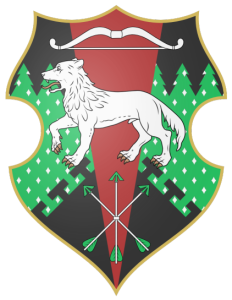
Deep within the forest, the villages of Nögdsa, Sobbüm’bul and Nyatpuh are built around gigantic ancient trees that stretch high up into the sky. Hollowed out, these trees form the central meeting spot for the Nuö’laaki - a group of 10 highly respected elders, 5 male and 5 female who govern over the villages.
The village of Badgacho is built around a cluster of these enormous trees, and due to the predominance of wild creatures that roam the forest floor, the entire village is suspended up among the trees. Wooden platforms and bridges span the distance between the vast trunks, offering a unique and quirky treehouse village.
Known as the best fighters of the four tribes, the Yil’parù warriors battle any Pùg’parù raiders they find within their lands, and any they find hassling Ült’bash’parù farms. Sworn enemies, the coastal and forest people have a deep hatred for each other and have been fighting for countless generations.
Wild chöglugt, fast and loyal mounts favoured by both the Yil’parù and Pùg’parù, roam the forest, and are often the reason the Pùg’parù are found lurking there. Only the Yil’parù are able to tame them - using a special herbal compound that when used to coat a slender dart-like arrow will make the chöglugt calm and agreeable to being tamed through bonding. Not knowing this secret, the coastal thieves continue to try and capture the prized beasts, always to fail, and sometimes never to return home.
The Yil’parù dress themselves with soft hides of the fayö (deer). Men wear nothing but a short skirt-like loincloth, while the women dress in a simple sleeveless shift dress with beaded detailing around the neck. Both male and female Yil’parù adorn themselves with many strands of wooden and clay beads, with other jewellery made from feathers, animal claws and leather cord. It is common to see yet more beaded strands hanging from their ornately embossed leather belts.
For special events and celebrations, the Yil’parù like to dress in ceremonial garb. Highly decorated clothing pieces are passed down through generations, such as the carved wooden chestplates worn by the women. Men wear ornately beaded cape-like collars over their shoulders for special ceremonial events, along with longer and more heavily decorated loincloths. Those who have completed the dangerous üs’ko hunt for their coming of age, wear ceremonial clothing made from the beautifully striped tüb’dün (tiger) skin - a sign of their bravery and skill.
During such special occasions, the elite warriors, the Fasaü, are permitted to wear the shö’chüx - a magnificent antlered headdress dripping with beads and feathers. Marking them as the skilled hunters and warriors they are.
Life within a Yil’parù village is a shared communal one, where each member contributes to the village as a whole, and meals are taken around a large fire pit together. As such, their homes are basic single-roomed huts, made from wood and mud - with a small fireplace to chase off the chill from the nearby mountain. Large enough for a bed, storage chests and not much more, the Yil’parù have no need for anything else.
The Yil’parù trade the hides and leathers from hunting, herbal potions made from rare flowers that grow only within the forests, and of course the chöglugt - specifically breeding cream coloured ones they trade (reluctantly) to the Pùg’parù.
Each year, at the mid point of winter, members from all tribes come to Yamarga for a week-long festival. With weapons prohibited and the promise of peace, the tribes intermingle to celebrate.
Situated on the edge of a cliff overlooking the ocean, the festival site is a walled off weapons-free zone, with large campgrounds for each of the four tribes and a grand front gate entrance where all weapons must be surrendered and locked away before entry is permitted.
While the tribes camp with their own kind, the large flat meeting area is enjoyed by all as a place to gather around the large fire pits to share food, songs and merriment.
The yearly meeting of the leaders - the nulda‘bücux - is held in a large stone meeting hall, where tribespeople are able to gather in the gallery and listen to the business the tribal leaders discuss with each other.
Offworld traders are only permitted on Tai'nai during the Yamarga festival - when a select few trusted traders are granted a spot on the landing pads that surround the main meeting area of the site to form a marketplace. The offworlders bring finely woven fabrics, specialty foods and other items of curiosity for the natives, and in turn the Ta’naihapi provide the traders with exotic Ta’nai animals, animal pelts and valuable gems.
At first, the Ta’naihapi were all one people, living together in harmony at Yamarga. But as the population grew, people began to question and disagree with the way things were done.
Some said the rules were too strict and the punishments too harsh. Some wanted to mine the forbidden mountains for the shiny metals and gems. Some felt it was wrong to keep taking from the land and wanted to harvest only that which they grew themselves. Some believed that they should only use that which the forest provided and not to scar the sacred lands with mines or planted fields.
It was decided that they would become four separate tribes. The Pùg parù went to the coast, where they were free to make their own rules and live with the wildness of the sea. The Ült’bash’parù went to the flat lands, where they could grow crops and raise animals, no longer just taking from the land, but also giving back. The Wukto’parù climbed into the mountains, where they could mine and forge in peace - away from the petty squabbles of the others. The Yil’parù moved to the forest, where they could hear the whisper of the trees and live simply alongside nature.
Over time, the division between each tribe’s beliefs faded a little. Such that all tribes trade with each other for things they do not have. The Yil’parù accepted the use of forged metal for things like their knives and harvested produce, the Ült’bash’parù came to accept hunting and will trade for hides and leather. The Wukto’parù come to the aid of those who need it and generously share their skills and metalwork. Only the Pùg parù cause any trouble with their love of lawlessness. However two of their villages have broken away from the main tribe, and are somewhat independent. Still considering themselves Pùg parù, but not savage and violent as the others.
To help build the world of Ta'nai and highlight the language barrier that the offworlder and Zü faced, a fictitious fantasy language was created for the Ta’naihapi. Creative license has been taken with the use of special characters in some words to give the language a more "alien" flavour, and it is by no means a properly implemented language!
In most cases, the meaning of the word should be found within the context of the sentence if it is not specifically stated, however there are times where the meaning is intentionally withheld - to highlight when a character does not understand the words, just as the reader does not (although they are all listed in the glossary!)
Since it is an "alien" language however you interpret it as being pronounced, is perfectly fine. However there is a glossary and guide which will show you how the words are intended to be pronounced.
Most Ta’naihapi cannot read anything much more than a few important words and names, as they have little use for a written language. Language and written history is preserved by those in special hereditary roles tasked with that duty. The Ta’naihapi written language consists of symbols arranged from top to bottom.
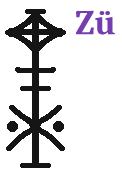
They do not generally keep track of dates, other than the Orch’shü who is in charge of all timekeeping. Days ("bo") are done using {number}'bo to describe the day of the week - eg what we consider to be Wednesday would be "qii’bo" (three'day). Likewise months are marked in seasons, using start{season}, middle{season}, end{season}. Yearly timeframes (such as ages) are marked by the number of "winters", because all Ta’naihapi age up one year on the last day of winter, which is the last day of the Ta’naihapi year.
For example, someone who is 20 years old would be said to have reached/seen "twenty winters". Zü’s birthday is 12 days into the middle of summer, which would be 12'day middle'summer ("lizo'bo mina’irqaain"). Qiiraa's birthday is the 24'day start'autumn ("zokar'bo chu’doysa")
Start = chu
Middle = mina
End = vat
Spring = xüsra
Summer = irqaain
Autumn = doysa
Winter = vathu
1 - li
2 - zo
3 - qii
4 - kar
5 - ju
6 - ur
7 - si
8 - he
9 - sig
10 - sa
Great King [of] Land - He is the God of the land. Ruling over the ground and all non-aquatic creatures.
Great King [of] Thunder - He is the God of Darkness, Night and Thunder. Ruling over Night and storms.
Great Queen [of] Water - She is the Goddess of Water and sea creatures. Ruling over all bodies of water and the plant and animal life within.
Great Queen [of] Sky - She is the Goddess of the Sky, Moon and Light - She rules over daytime, the moon and lightning.
The Ta’naihapi believe that the four God/Goddesses are bonded life partners. Bax Tür’bash with Xob Nas’bǔ (Land & Water), and Bax Tür’malcha with Xob Nülbuxa (Night & Day).
Bax Tür’malcha and Xob Nülbuxa bring power and strength.
Bax Tür’bash and Xob Nas’bǔ provide prosperity, fertility and abundance.
It is believed that storms are created when Bax Tür’malcha and Xob Nülbuxa are fighting over who gets to rule. Xob Nülbuxa lights up the sky with lighting, but Bax Tür’malcha shouts with his thunder and winds, making her sad and her tears fall as the rain. Earth tremors are believed to be caused by Bax Tür’bash's anger, just as tidal waves are from Xob Nas’bǔ.
The Zhaǔ
Both the Pùg’parù and Wukto’parù are ruled by a Zhaǔ - A sovereign King/Queen who rules over the entire tribe. They are a hereditary role, being a direct descendant of the very first leader of the tribe from back when the tribes first split. Each village has an appointed Mobordü - war chief, who acts as an intermediary between the Zhaǔ and the villages, and a Matja’nulda, who is in charge of the more mundane everyday governance of each village.
For the Pùg’parù, the Zhaǔ is always male, and upon his death, all male heirs fight to the death, with the winner becoming the next Zhaǔ. For the Wukto’parù, it is the oldest born child who becomes the next Zhaǔ.
The Yil’parù and Ült’bash’parù have no one supreme leader, and each individual village is instead ruled by a Nuö’laaki (meaning 'old parents') - A council of 10 elders (5 female, 5 male) chosen by their tribespeople from those who had proven themselves worthy younger in life, and now sit together to make judgments for running their village. The oldest among the 10 is appointed as the "Chief Elder", a spokesperson to be the main one to speak on their behalf.
On the few occasions it becomes necessary for decisions to be made on behalf of the entire tribe, one man and one woman from each Nuö’laaki is chosen to join with those from each other village. That group is then trusted to make fair and just decisions on behalf of all their tribespeople. These meetings usually take place each Yamarga festival, unless an emergency meeting needs to be called.
Pùg’parù
The 'Wamikwik' (elite warriors) are the highest in social standing after the Mobordü, Tuulu (Zhaǔ's sons), and the Zhaǔ. They do not give respect to elders, as very few of their tribespeople are expected to live until old age, so it is not seen as a badge of honour. Daughters of the Zhaǔ are considered worthless (as they cannot be heirs) and are killed at birth.
They have a strong "every man for himself" way of life. They live in basic thatch huts and cook their own meals at one of the many shared firepits scattered around the village, but other than socialising, they do not share anything and give very little help to each other. At the age of 15, children are allowed to join in hunts/raids, and they are considered adults at 20 and can move out of home. There are no formal schools or teaching, and most knowledge is passed down from the parents to their children, or by the few elders who managed to survive. As the death rate of the Pùg’parù is quite high due to their warmongering nature, families are expected to be large to offset the losses. Those who are not warriors or parents are generally involved in the production of tradeable goods (seagrass matting, leather tanning, jewellery etc.) or fishing.
Ült’bash’parù
As many of the Ült’bash’parù live out on their farms, there is not much communal living, even among those who live within the villages, however they will help neighbours and fellow tribespeople out when needed. Their houses are large and well built, passed down through generations. They have no real social structure under the Nuö’laaki, although informally those who live on larger farms are generally considered to be of higher standing than those on smaller farms, and those who live in the villages are seen as higher standing than those out on the farms.
At age of 20 they are considered adults and may leave the parents house, though many stay on and it is not uncommon for larger farms to have more than one generation living on them. There is no schooling, all knowledge is passed on via parents and largely by the elders who are too old to work the fields. The Ült’bash’parù is a matriarchal society, where the women of the household hold the majority of the power and influence.
Wukto’parù
Children attend a form of schooling during the day until they reach the age of 15, where they are then able to take on a profession to contribute to their family until they leave home at 20. Elders are respected and have an equal standing to the Wamikwik (elite warriors) of the tribe. Above them in standing are the Mobordü, Tuulu (Zhaǔ's sons and daughters) and then the Zhaǔ.
As their mountain home is harsh and does not lend itself well for growing crops - they eat shared meals in large meeting halls and make sure to take care of their own. Any who are old or infirm are given food and shelter without stigma, for all tribemembers are considered to be kin. The Wukto’parù is largely a matriarchal society, with the women taking on the respected roles of healers and keepers of knowledge, while the men take on the more physical roles. However they do have female warriors and blacksmiths among the tribe, who are considered equal if not more revered than the men.
The Nuö’laaki are highly respected and revered as the highest status members of the tribe, followed by the Fasaü (The elite warriors), the Orch’shü (timekeeper), Valaa (special service roles) and the Zhǔ (Elite hunters). Status in Yil’parù society is earned through deeds rather than based on gender.
The Yil’parù live an almost completely communal lifestyle. While they do live in separate huts, they are mostly used only for sleeping and everything else is communal. All meals are eaten around a communal fire and prepared by the village cooks, and all services within the village are done freely. From the age of 5, children move out of the parents home and into the Sa’suus - a shared sleeping house overseen by the Xab’laaki (Care parents). Schooling is typically done by the elders and the warriors/hunters (when training for those skills). Raising the children is done by the entire community.
Both the Pùg’parù and Yil’parù have complex rituals surrounding coming of age, while the other tribes do not.
Sexual activity is prohibited before adulthood, even among the lawless Pùg’parù, and while virginity is not a concept the Ta’naihapi consider important, the first 'joining of bodies' is often considered special.
Pùg’parù
Upon reaching the age of 20, a Pùg’paru can choose to undergo their barbaric right of passage, the 'Nitit’raidi' (Fear trial). In this trial, the young person is taken from their bed at dawn and brought blindfolded to the centre of the village where they are tied to a pole. Every adult tribemember is given the opportunity to place one shallow cut on their body (deep enough to draw blood) using a special bone blade. Once done, the young person is locked into a bamboo cage and taken far off shore out into the kölelu (shark) infested waters. The cage is designed to float just enough to allow the person inside to breathe, while keeping them submerged with the kölelu attracted by the blood. They are left there alone until the morning, when they are given the opportunity to end the trial or continue. If they choose to end the trial, they are marked with a cross tattoo on the back of their right hand to show they failed due to fear, and they must wait another year to try again. If they choose to continue the trial, they are left alone until the following morning. Starved and having endured two sleepless nights alone in the cold waters, they are then required to fight 20 opponents - one for each year of their life, until they are victorious or collapse. Should anyone manage to defeat all 20 opponents (an unlikely feat), they are given the honorific title "Chü" (Strong) to use before their name. Regardless of the outcome (either collapsing or winning), they are now "chü’üs’ko" (tough adult)
If the young person does not want to do the trial, they will not become üs’ko until they reach the age of 25, and will be marked with a horizontal line tattoo on their left hand to signify their refusal.
Ült’bash’parù
The Ült’bash’parù do not have a right of passage for üs’ko, and grant that title once the person has reached age 20.
Wukto’parù
Once a Wukto’parù reaches the age of 20 they are considered üs’ko. They have the option to go out on their right of passage quest where they are sent out alone into the harsh snowy mountain lands, without food or water, there they must survive for 4 days and hunt a kabxo (bear) to bring back the claws, teeth and pelt. If they succeed they are tattooed with a symbol of a kabxo to represent this achievement, are permitted to use depictions of the kabxo on their armour, and declared to be "zhǔ’üs’ko" (adult by way of the hunt), but there is no penalty for refusing the hunt or for failure.
The Yil’parù have 3 ways to reach üs’ko. By age, by hunt, or by trial, and they live in a group home (sa’suus) until they reach üs’ko and are allowed to leave.
By Hunt - Upon reaching the age of 20, a Yil’parù can choose to do the üs’ko hunt - they must hunt specific animals to obtain the teeth/claws/pelts and build themselves a hut. Once completed, these items are made into ceremonial clothing as well as used as an offering to the Gods and a donation to the tribe. They are then tattooed to reflect their victory and declared to be "zhǔ’üs’ko" (adult by way of the hunt) and may now live in their hut in the village. Should they fail the hunt, they may try again as many times as they need to. If the zhǔ’üs’ko is male, they enter the fighting ring for the union trial battle to find a life partner. If the zhǔ’üs’ko is female, they are free to find a partner among the tribe, or they may remain in the sa’suus so that they can compete in the trial for a partner.
By Trial - All those over the age of 18 and still living in the sa’suus may enter the union trial of someone who has just become üs’ko by age or hunt. The üs’ko should not deny any opponents other than to refuse a same sex partnership - the fate of battle must decide who their partner will be. The hopefuls fight the üs’ko in pairs until only one remains - who then becomes the life partner of the üs’ko, and becomes "raidi’üs’ko" (adult by way of the trial). The union is then consummated in the fighting ring with the tribe bearing witness.
By Age - If a young person has not completed the hunt and does not want to do the trial to win a partner, they will not become üs’ko (nor leave the sa’suus) until they reach the age of 25, and then become "zonù’üs’ko" (Adult by way of age). Once they leave the sa’suus, they may choose to take any life partner they wish and do not do a union trial.
Each tribe has a different way of acknowledging and creating partnerships.
Pùg’parù
The Pùg’parù do not have any formal acknowledgement of partnerships/unions. They are typically based on lust, and promiscuity is rampant. Those who wish to be together do so, and when they no longer wish to be together, they part ways. In addition to this casual stance on relationships, they hold a version of the union trial where on the first day of each season, all those who wish to fight for a partner participate in one big free-for-all battle in their village where they fight with bamboo sticks. Combatants choose the person they would like as a partner and fight and try to knock them to the ground, and thereby win them. It is expected that participants will honour the result of the battle, and remain partners until at least the next season's fight (typically longer), however this is not enforced.
The Zhaǔ selects his women from those who have not yet been with a man, and forms a union with any who give birth to a son. These women are kept sheltered/imprisoned in his xobüx (castle) to ensure they remain faithful only to him.
Ült’bash’parù
It is common for the Ült’bash’parù to arrange their unions based on what benefits the prospective suitor can offer for their chosen one (or offer to the family), rather than solely for love. Thus a suitor may offer animals, produce or even parcels of land, and the partnership may be just as much about financial/property gains than it is about the romantic feelings. Once a couple have the blessings of both families, the union is considered to be in effect and a big celebration is had.
Wukto’parù
Couples wanting to become life partners request an audience with Zhaǔ, where they bring an offering of gems, and anyone opposing the union is given the opportunity to speak up. The Zhaǔ will grant or deny the union based on any objections. Once a union is granted, the entire tribe celebrates with a two day festival of feasting and merriment, where the couple are given gifts and songs are sung to ensure their health and happiness. A man may take on more than one partner if their home has sufficient space, and it is typical for a male Zhaǔ to have 4 female partners - one representing each of the 4 Gods.
The Yil’parù have built their relationship system around a battle known as the Union Trial, which also forms the final part of the coming of age ceremony. Participants fight with wooden staffs to knock each other to the ground, and determine who becomes the union partner. In this way, the partnerships are built on conquest in battle and not on romantic feelings - any young man or woman intending to do the union trial is forbidden from forming romantic attachments and is to let the fate of the battle decide who they will be partnered with. It is expected that love will form after the union has been established. The head of the household is the person who was victorious in the fight - the "neh’towi (be that male or female)
Outside of this union trial (for those who choose not to, are unsuccessful, or past the age of 25) the partnerships can be based on love, companionship, necessity or other factors - and are formed when the couple seeks and obtains permission from the Nuö’laaki. It is expected that when a tribemember loses their partner in death, that someone who is also without a partner will form a partnership together, or in the case of young widows, if there are no single men with which to form a partnership, she may be invited into an existing partnership - so that she is not left alone.
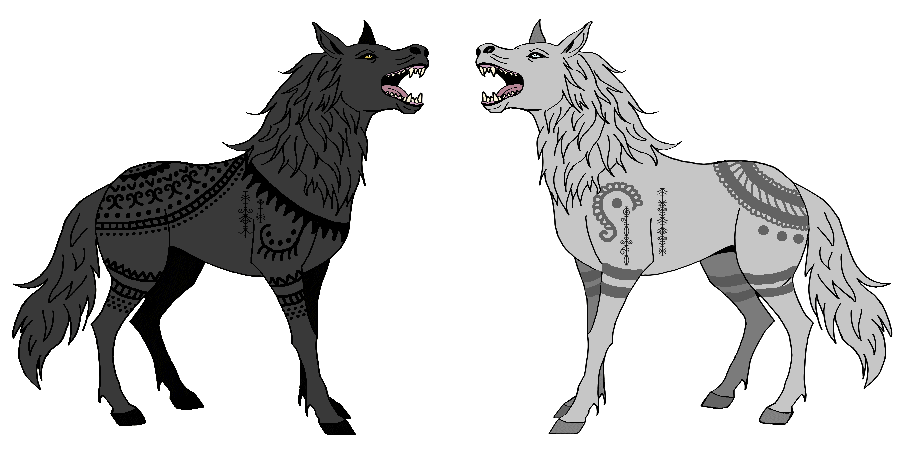
Chöglugt are the domesticated mounts used by the Yil’parù and Pùg’parù people, and are native to the forests of Ta’nai. With a horse-like body and wolf-like heads, these are intelligent, fearless and loyal creatures, beloved and prized members of the tribes who use them.
Chöglugt are considered expensive and exotic creatures throughout the galaxy, and the Ta’naihapi use them to barter with the interplanetary traders for offworld goods. As they do not breed well outside of Ta’nai, they are always under great demand by the traders, who sell them to the rich for large profits. However, despite their great value, very few offworlders dare to step foot on Ta’nai, and only a foolhardy one would do so to hunt chöglugt, especially without the assistance of the taming arrows. The reputation of the Ta’naihapi being savage warriors deters most visitors to the planet.
The chöglugt of the Pùg’parù
As chöglugt are not found in the coastal lands, the Pùg’parù obtain their chöglugt via trade with the Yil’parù, or from breeding the ones their tribe members already own.
The Pùg’parù specifically choose only sandy-coloured chöglugt as their mounts, in keeping with their love of their beaches, and do not decorate theirs with tattoos as the Yil’parù do. Instead they stain the legs blue like the ocean and shave their manes into a single spiked ridge along their necks, which are coloured black to represent the short spiked hair of the shamed from which the Pùg’parù tribe was first formed.
The Pùg’parù decorate their chöglugt bridles with jawbones from large sea creatures, to give them a fearsome look, and hang blue banners from their saddles with heraldry to mark which village they are from.
The chöglugt of the Yil’parù
The children of the Yil’parù choose their first chöglugt before they are old enough to ride. The young animal and rider grow up together creating a great bond that will see them well in future battles.
It is customary to tattoo the mount with designs that have special meaning to the rider and signify ownership, ancestry and shared victories. Each time a Yil’parù warrior returns from battle, both warrior and chöglugt earn additional tattoos to speak of their victories. Thus the most ornately decorated chöglugt are owned by the fiercest and most skilled warriors of the tribe. While the chöglugt’s fur hides the tattoos, their symbolic meaning remains even if they cannot be seen. To address this, the designs are periodically painted over with a long-lasting ink to keep them visible.
The Yil’parù people often own more than one chöglugt as a symbol of their status and wealth, and allow them to carry home the carcasses from hunting. Warriors typically also have a spare chöglugt trained as a battle mount in case the unthinkable happens and their primary mount dies. Breeding the chöglugt is common among the Yil’parù, as they are one of the main sources of trade to the offworld traders at Yamarga.
Wild chöglugt are easily tamed with the help of a special taming arrow used only by the Yil’parù. The arrows are dipped in a special potion that mimics and replaces the familial bond the beast would have with its mother, this allows it to bond quickly with the new rider. However only those with a well forged partnership over several years are trusted as a fearless battle mount. For this reason, offspring that are raised from birth are more highly prized than those caught from the wild.
Playful and social creatures, when not being ridden, the chöglugt of the entire Yil’parù tribe roam the outskirts of the village freely, protecting the tribe from harm, hunting for themselves and raising their young. Warriors will keep their primary mount always saddled and stabled at their hut so that they are ready to go at a moment’s notice, with any other chöglugt out with the rest of the herd.
The bond a warrior has with their chöglugt is so great that when their rider dies, the chöglugt is sacrificed during the funeral ceremony. This not only ensures that the warrior has a trusted mount to take them into the afterlife, but also to save the chöglugt from suffering over the loss of their rider.